What should a Red Bank homebuyer ask about flood disclosures before closing?
 Miller & Gaudio PC
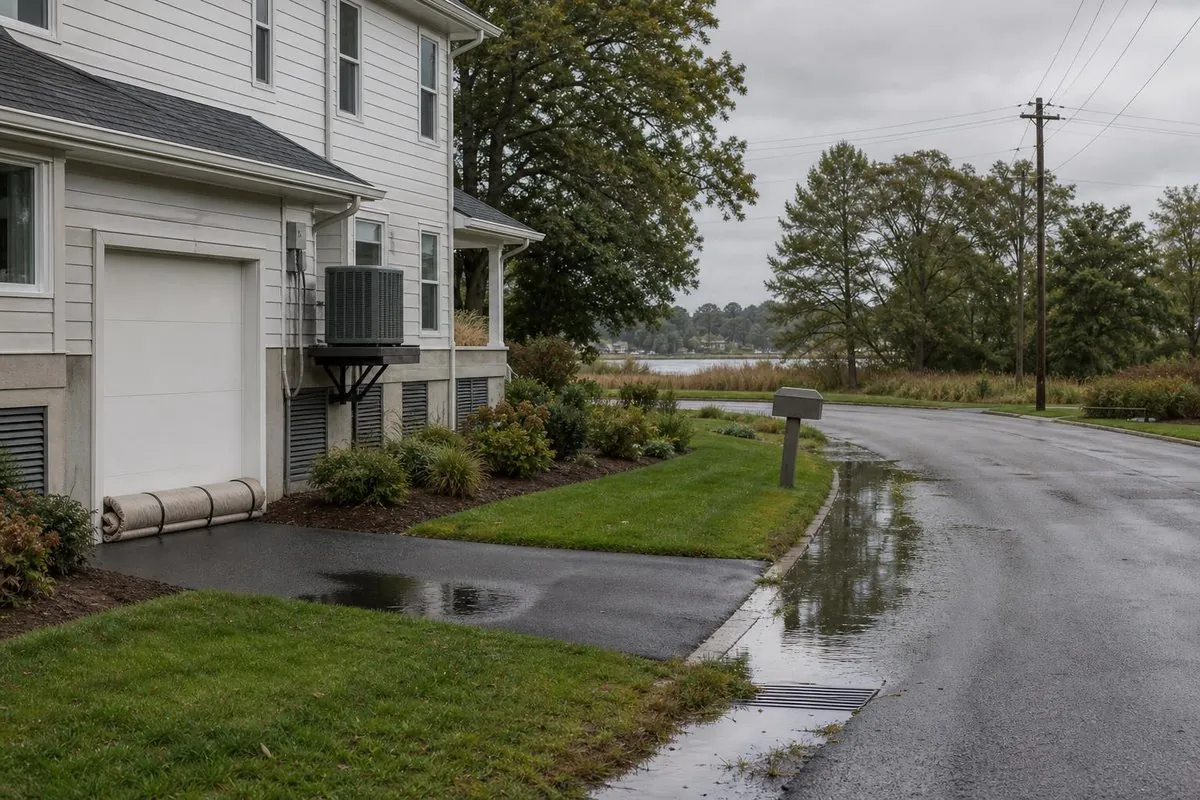
Buying a home in Red Bank, New Jersey is often about lifestyle—walkable downtown, rail access, and the waterfront. But because the Borough sits along the Navesink River and near the coast, many buyers also need to think like risk managers. Flooding isn’t only a “storm surge” issue; it can be a combination of tidal influence, heavy rain, and drainage conditions that vary from block to block.
New Jersey’s flood-disclosure requirements are meant to reduce surprises for buyers, but a disclosure form only helps if you know what to do with it. The best time to ask hard questions is before you are locked into the deal—when you can still renegotiate terms, adjust inspections, or walk away under contract protections.
This article is general information, not legal advice. If you are under contract, talk to a New Jersey real estate attorney about your specific property, timelines, and contingencies.
Miller & Gaudio can explain the issues involved in your real estate law matter and help you understand the next step.
Red Bank’s official municipal materials describe the Borough as located in Monmouth County along the Navesink River, about five miles inland from the Atlantic Ocean. That geography matters in a flood conversation because it can produce different risk patterns than a purely inland property: tidal backwater effects, coastal storms, and intense rainfall can all affect different neighborhoods differently.
Practically, that means two homes can have very different risk profiles even if they are close to each other:
Flood disclosures should be read as the start of your due diligence—not the finish line.
New Jersey’s flood-risk disclosure requirements were enacted in 2023 and took effect for sellers beginning March 20, 2024, as summarized by the New Jersey Department of Environmental Protection (NJDEP). The law requires sellers to disclose specific flood-risk information using the State’s property condition disclosure materials before the purchaser becomes obligated under the purchase contract.
In practice, many transactions use a Flood Risk Addendum (currently numbered Questions 109–117) that instructs sellers:
As a buyer, that structure is useful: it tells you which answers should be tied to objective tools and which answers are about the seller’s history and records.
When flood disclosures become a last-week issue, it’s usually because they intersect with at least one of these:
Lender conditions (Is flood insurance required for the loan? What proof must be delivered before closing?)
Insurance pricing and eligibility (Can you get a policy quickly enough? Do you need an elevation certificate or more underwriting information?)
Inspection scope and repair decisions (Does the disclosure suggest past seepage or flood damage that warrants a moisture-focused inspection plan?)
Municipal records and compliance (Is there an elevation certificate or floodplain permit history in Borough files that changes what you can do with the property later?)
A strong flood-disclosure strategy is to ask questions in the same order—lender and insurance first, then physical condition, then municipal documentation.
Most buyers should verify flood-zone status in two places:
What to ask (and save) before you remove contingencies:
Saving a dated copy matters because the closing process often involves multiple parties referencing “the map,” and you want everyone anchored to the same record.
Flood disclosures focus on seller knowledge and mapped zones. Local files can add the missing layer: what was permitted, documented, or required for prior work.
Red Bank’s flood damage prevention code states that the Floodplain Administrator must maintain and permanently keep, and make available for public inspection, records necessary for floodplain administration, including (among other items) Flood Insurance Studies/Rate Maps, FEMA map revisions, NJDEP delineations, permit issuance/denials, substantial improvement/substantial damage determinations, and as-built elevation certificates.
What to ask for (property-specific):
This is how a Red Bank buyer turns “unknown” answers into verifiable facts.
If you need municipal records and they are not readily available, New Jersey’s Open Public Records Act (OPRA) is often the mechanism to request them. The Government Records Council’s readable OPRA text states that—unless a shorter time period applies—a custodian should grant or deny access as soon as possible, but not later than seven business days after receiving the request (assuming the record is available and not archived/stored).
That timeline can conflict with inspection and financing deadlines, so a buyer should plan backward:
Even a “no records found” response can be useful—because it informs what you can and cannot corroborate before closing.
Federal law sets out flood insurance purchase and compliance requirements for certain loans in special flood hazard areas. In real-world closings, that typically translates to this: if the lender’s flood determination flags the property as being in an SFHA, the lender may require proof of a flood insurance policy as a closing condition.
Even when a policy is not strictly required, the NFIP’s consumer guidance stresses that most homeowners insurance does not cover flood damage, so many buyers still want a quote before they are committed.
What to ask your lender and agent early:
Sometimes a structure is shown in an SFHA on a FEMA map even though the building site is actually above the base flood elevation. FEMA explains that small elevated areas can be incorrectly included due to map scale limitations, and that property owners can request a map change through a Letter of Map Amendment (LOMA) or related process.
A LOMA is not a “closing week” tool for most buyers. It can require survey/elevation information and time for review. But it can still be worth discussing with your attorney and lender if:
Flood disclosures can indicate flood damage, water seepage, or pooled water due to natural flood events. When that happens, it’s not only about repair costs; moisture can create conditions for mold growth.
The New Jersey Department of Health publishes Mold Guidelines for New Jersey Residents and provides mold resources, and CDC guidance highlights health and safety concerns associated with mold cleanup. For homebuyers, the practical step is aligning inspection scope to the disclosure:
Before you commit to a home purchase, you need to understand what the seller’s flood disclosures mean for that property and for your closing. A checked box may lead to questions about prior water damage, available records, insurance, or lender requirements. At Miller & Gaudio, we help buyers review those issues while there is still time to address them in the transaction.
We review the contract and disclosure materials, identify documents that need follow-up, and coordinate the legal review with the relevant inspection, title, and closing issues. We can help you understand how an unanswered question or a lender condition may affect the next step and explain the options available under the contract. That review supports an informed decision; it does not replace the property inspection or promise that a home will never flood.
Our Red Bank firm was founded in 1984 and serves clients throughout New Jersey. Our real estate work includes contract review, title coordination, inspection issues, and closing documentation—the connected parts of a transaction that can be affected by flood-risk information.
Use this as a practical sequence (and bring it to attorney review):
Miller & Gaudio can explain the issues involved in your real estate law matter and help you understand the next step.
General feedback about working with Miller & Gaudio PC:
“I had a Great Experience Using Miller & Gaudio, PC Law Firm to handle my case. Frank Gaudio was Very Professional, quick to return phone calls, on time, was able to communicate & navigate using all forms of media.”
— V. M.
“Frank Gaudio explained thoroughly what I should expect. Every phone call / email was answered promptly by Bobbie Condello, Secretary for the Firm, whenever Frank Gaudio was unavailable. Overall it was a pleasant experience.”
— D. T.
Flood disclosures are designed to give you actionable information early in the transaction. The FAQs below focus on what Red Bank buyers should ask and verify before closing.
New Jersey requires sellers to provide flood-risk disclosures before you become obligated under the purchase contract. NJDEP summarizes this requirement and ties it to the effective date for sellers (March 20, 2024). In practice, many transactions use the State’s Flood Risk Addendum (Questions 109–117), which instructs that sellers must complete these questions before the purchaser is obligated.
The Addendum’s questions cover FEMA-mapped risk areas (Special Flood Hazard Area and Moderate Risk Flood Hazard Area) and seller knowledge items like flood damage, seepage, pooled water due to natural flood events, flood insurance, claims, disaster assistance, and elevation certificate availability. As a buyer, you should request the completed Addendum early enough to shape attorney review, inspections, and insurance planning—while you still have leverage.
Sources: NJDEP| Flood Disclosure Law | Home; SELLER’S PROPERTY CONDITION DISCLOSURE STATEMENT ADDENDUM – FLOOD RISK; P.L. 2023, CHAPTER 93, approved July 3, 2023
The Flood Risk Addendum distinguishes between mapping answers that must be verified and history/condition answers that depend on the seller’s actual knowledge. Specifically, the Addendum instructs that Questions 109–110 (whether the property is in FEMA’s special or moderate risk mapped areas) must be verified, and it references the State’s Flood Risk Notification Tool as a way to do that.
Questions 111–117 (such as flood events, seepage/pooled water due to natural flood events, claims, assistance, existing flood insurance, and elevation certificate availability) are answered based on the seller’s actual knowledge. For Red Bank buyers, that means you should treat any “unknown” response as a prompt for targeted follow-up—request documents the seller does have, and consider checking Red Bank municipal records that may exist even when personal recollection is incomplete.
Sources: SELLER’S PROPERTY CONDITION DISCLOSURE STATEMENT ADDENDUM – FLOOD RISK; NJDEP| Flood Disclosure Law | Home; P.L. 2023, CHAPTER 93, approved July 3, 2023
In the Flood Risk Addendum, the “100-year floodplain” corresponds to FEMA’s Special Flood Hazard Area (SFHA), and the “500-year floodplain” corresponds to a Moderate Risk Flood Hazard Area. These phrases can be misunderstood: they do not mean flooding only happens once every 100 or 500 years. They are shorthand for annual-chance probabilities used in flood mapping and insurance.
For buyers, the practical takeaway is to treat these terms as risk categories that can affect lender requirements and insurance costs—not as predictions of a flood schedule. When reviewing a Red Bank disclosure, ask your attorney or insurance agent to help translate the mapped category into concrete implications: whether the lender will require a policy, what documentation is needed, and whether the property’s history (seepage, pooling, prior repairs) suggests a risk that mapping alone may not capture.
Sources: FEMA Emergency Management Institute Glossary; FEMA Flood Map Service Center: Search By Address; What is my Flood Zone | National Flood Insurance Program
Start with FEMA’s Flood Map Service Center (MSC) address search and save a dated PDF/printout of the results. FEMA describes the MSC as the official source for National Flood Insurance Program flood hazard information, and your lender’s flood determination will commonly rely on FEMA mapping. Saving a dated copy helps prevent confusion when different parties rely on different screenshots.
Next, cross-check New Jersey’s flood-disclosure tools. NJDEP maintains a flood disclosure program page and tool intended to help users identify whether an address is in FEMA’s special or moderate risk mapped areas for disclosure purposes. If the tools disagree—or if the lot is partially in a mapped area—ask your attorney what contract protections or document requests should be made while you still have inspection/financing leverage.
Sources: FEMA Flood Map Service Center: Search By Address; Products and Tools | FEMA.gov; NJDEP| Flood Disclosure Law | Home
Ask the lender for written confirmation of (1) whether flood insurance is required for your specific loan and (2) what proof must be provided before closing (binder/dec page, effective date, coverage amount). Federal law includes flood insurance purchase and compliance requirements for certain loans secured by improved real estate in areas identified as having special flood hazards where flood insurance is available.
Also ask about timing. If a policy is required, the lender may treat it like any other closing condition; delays can push closing dates. Even when flood insurance is not strictly required, NFIP consumer guidance emphasizes that most homeowners insurance does not cover flood damage, so many buyers still want a quote before they remove contingencies. In Red Bank, do not wait for “closing week” to learn the cost.
Sources: 42 USC 4012a: Flood insurance purchase and compliance requirements and escrow accounts; SELLER’S PROPERTY CONDITION DISCLOSURE STATEMENT ADDENDUM – FLOOD RISK; What you need to know about buying flood insurance
If the seller answers “yes” to flood damage, seepage, pooled water due to a natural flood event, or any flood insurance claim question, request documentation—not just a narrative. Start with flood insurance declarations pages (if any), claim paperwork (NFIP or private), repair invoices, remediation records, and permits/final approvals for significant work. These documents help you understand scope, recurrence risk, and whether repairs were formalized.
Then cross-check what Red Bank may have on file. Red Bank’s floodplain code states the Floodplain Administrator must keep records available for public inspection, including permits, substantial improvement/substantial damage determinations, and as-built elevation certificates. If a seller’s file is incomplete, municipal records can help corroborate what happened and whether future renovations could trigger additional compliance requirements.
Sources: SELLER’S PROPERTY CONDITION DISCLOSURE STATEMENT ADDENDUM – FLOOD RISK; Chapter 364: Flood Damage Prevention – Borough of Red Bank, NJ; FEMA Flood Map Service Center: Search By Address
An elevation certificate is a FEMA form typically completed by a licensed surveyor or engineer that documents key elevation information about a structure. The Flood Risk Addendum asks whether an elevation certificate is available and states it must be shared with the buyer if it exists. For buyers, it can be useful for insurance rating and for understanding how the building sits relative to flood elevations.
In Red Bank, it can also be a municipal-record issue. The Borough’s floodplain code lists as-built elevation certificates among the records the Floodplain Administrator must maintain and make available for public inspection. If the seller answers “unknown,” you can still investigate whether one exists in municipal files. Before closing, ask your insurance agent whether an elevation certificate would materially change quoting, documentation requirements, or underwriting timelines.
Sources: SELLER’S PROPERTY CONDITION DISCLOSURE STATEMENT ADDENDUM – FLOOD RISK; Chapter 364: Flood Damage Prevention – Borough of Red Bank, NJ; What you need to know about buying flood insurance
If flood risk is on the table, focus on records that tie directly to compliance, rebuilding, and future renovation constraints. Red Bank’s floodplain code states that the Floodplain Administrator must maintain records for public inspection and lists examples including Flood Insurance Studies/Rate Maps, FEMA map changes, permit issuance/denials, determinations about substantial improvement/substantial damage, and as-built elevation certificates.
A practical request list for a buyer is: (1) any elevation certificate on file; (2) floodplain development permits or related correspondence; (3) building permits and finals for flood-related repairs; and (4) any determinations or letters about substantial improvement/substantial damage. These items help you verify the story behind the disclosure and anticipate whether future projects (finishing a basement, additions, major renovations) could trigger additional flood-resistant construction requirements.
Sources: Chapter 364: Flood Damage Prevention – Borough of Red Bank, NJ; Residents | Red Bank Borough, NJ; Open Public Records Act – N.J.S.A. 47:1A-1 et seq. (as of July 28, 2017) (PDF)
OPRA timelines matter because inspection and financing deadlines can come quickly. The Government Records Council’s readable OPRA statute explains that—unless a shorter time period applies—a custodian should grant or deny access as soon as possible, but not later than seven business days after receiving the request, assuming the record is available and not archived/stored.
For a Red Bank homebuyer, treat OPRA like a deal-critical deadline. Submit narrowly tailored requests early (ideally during attorney review or immediately after contract acceptance), request electronic delivery, and specify the property address, document types, and date ranges. The GRC also provides a time-frame overview page that discusses timing rules and exceptions. If records could change your decision, do not wait until the week of closing.
Sources: Open Public Records Act – N.J.S.A. 47:1A-1 et seq. (as of July 28, 2017) (PDF); Government Records Council (GRC) | Time Frame for Access; Government Records Council (GRC) | Frequently Asked Questions
If disclosures mention flood damage, seepage, or pooled water, assume the next step is not just “get a contractor estimate,” but “confirm moisture conditions and remediation.” The New Jersey Department of Health provides mold resources and publishes Mold Guidelines for New Jersey Residents. CDC guidance also highlights health and safety concerns related to mold cleanup and recommends precautions.
From a buyer’s perspective, the safest approach is to align inspection scope to the risk signals: consider moisture-focused evaluation, request any remediation documentation, and ask whether repairs addressed root causes (grading/drainage pathways) or only cosmetic finishes. Also consider preparedness: NJOEM’s flood safety guidance notes health hazards associated with floodwaters and emphasizes safety steps before, during, and after flood events—useful context if you move into a home with known water history.
Sources: Department of Health | Environmental Health | Mold; Mold Clean Up Guidelines and Recommendations | Mold | CDC; Floods & Flash Floods | NJOEM
Miller & Gaudio can explain the issues involved in your real estate law matter and help you understand the next step.

Related Miller & Gaudio Videos and Social Posts